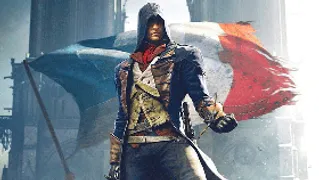
When Assassin’s Creed Unity was released in 2014, it transported players to one of the most dramatic periods in European history: the French Revolution. Set between 1789 and 1794, the game places players in the heart of Paris as the monarchy collapses, political factions fight for power, and ordinary citizens challenge centuries of social inequality.
While Unity takes creative liberties for the sake of storytelling, it remains one of the most visually impressive recreations of Revolutionary France ever created in a video game.
For history enthusiasts and Art History students alike, the game offers a fascinating opportunity to explore how digital media can recreate the past.
What Was the French Revolution?
The French Revolution began in 1789 and transformed France politically, socially, and culturally.
For centuries, French society had been divided into three estates:
- The Clergy
- The Nobility
- The Common People
While the first two estates enjoyed privileges and wealth, the majority of the population faced heavy taxation, poverty, and limited political influence.
Economic crises, food shortages, and growing dissatisfaction with the monarchy eventually led to widespread unrest.
The Revolution would ultimately overthrow the old system and reshape the future of Europe.
Paris as a Living Historical Reconstruction
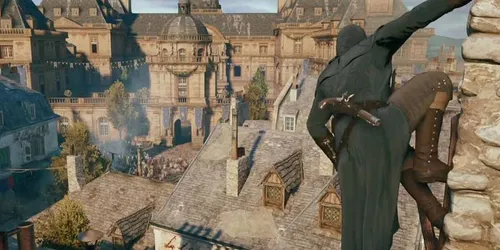
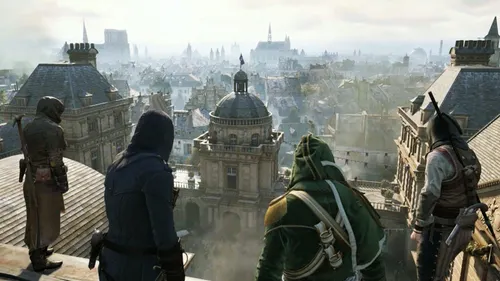
One of Unity’s greatest achievements is its recreation of Paris.
The developers spent years studying:
- Historical maps
- Architectural plans
- Paintings
- Contemporary documents
- Archaeological research
The result is a city that feels remarkably authentic.
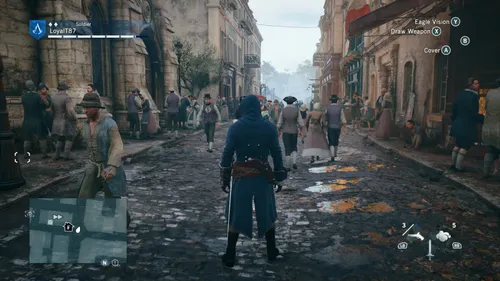
Players can walk through crowded streets, bustling markets, narrow alleyways, and grand public squares that reflect the appearance of late eighteenth-century Paris.
The city itself becomes a historical document.
Notre-Dame Before the Fire
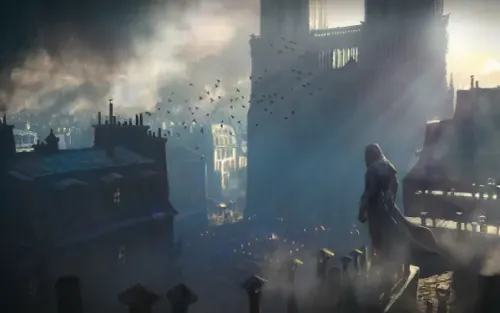
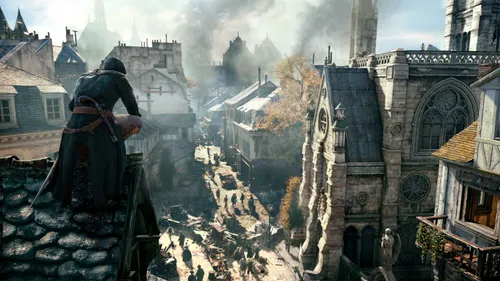
Perhaps the most famous landmark in the game is the Cathedral of Notre-Dame.
Years before the devastating fire of 2019, Assassin’s Creed Unity offered one of the most detailed digital recreations of the monument ever created.
The cathedral serves as both an architectural masterpiece and a symbol of the immense influence of religion in pre-revolutionary France.
For Art History students, exploring Notre-Dame in the game provides an opportunity to appreciate Gothic architecture in a uniquely interactive way.
Revolutionary Crowds
One of the defining characteristics of the French Revolution was mass political participation.
The streets of Paris became spaces of protest, debate, and violence.
Unity captures this atmosphere through enormous crowds.
Players witness:
- Public demonstrations
- Political speeches
- Riots
- Executions
- Military patrols
These scenes help communicate the chaos and uncertainty of revolutionary life.
The city constantly feels on the verge of transformation.
The Storming of the Bastille
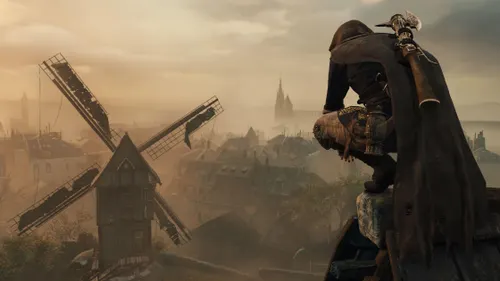
The storming of the Bastille on July 14, 1789, is often considered the symbolic beginning of the Revolution.
The fortress-prison represented royal authority and political oppression.
Although the game dramatizes events for narrative purposes, it allows players to witness the significance of this moment and understand why it became such a powerful revolutionary symbol.
Even today, Bastille Day remains France’s national holiday.
The Reign of Terror
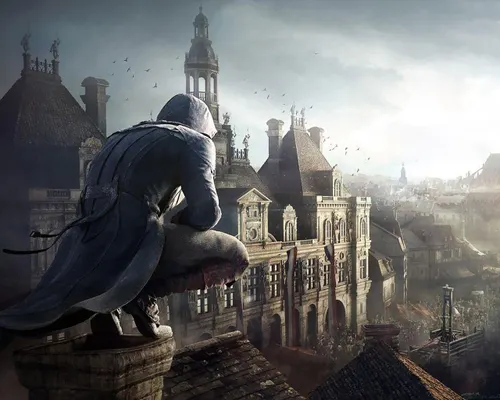
As the Revolution progressed, internal divisions intensified.
Political leaders who had once fought for liberty began accusing one another of treason.
This period became known as the Reign of Terror.
Thousands of people were executed, often by guillotine.
The game portrays the growing instability of revolutionary politics and the fear that spread throughout Paris during these years.
Historical Figures in the Game
Several real historical figures appear throughout Unity.
Among them are:
- Maximilien Robespierre
- Napoleon Bonaparte
- Marquis de Sade
While their portrayals are fictionalized, their inclusion helps connect players to major political and cultural developments of the era.
Napoleon’s appearance is particularly interesting, as he would eventually emerge from the Revolution to become one of the most influential figures in European history.
Art During the Revolution
The French Revolution did not merely transform politics—it transformed art.
Artists increasingly used their work to promote revolutionary ideals such as:
- Liberty
- Equality
- Citizenship
- National identity
One of the most influential artists of the period was Jacques-Louis David.
His paintings became powerful political tools that helped shape public perceptions of revolutionary events.
Although David does not dominate the game’s narrative, the visual culture of the Revolution can be felt throughout Paris.
Neoclassicism and Revolutionary Ideals
The dominant artistic movement of the period was Neoclassicism.
Inspired by Ancient Greece and Rome, Neoclassical artists emphasized:
- Civic virtue
- Heroism
- Rationality
- Sacrifice
These values aligned closely with revolutionary political ideals.
The architecture, monuments, and public imagery seen in Unity often reflect the influence of this artistic movement.
Understanding Neoclassicism helps explain why revolutionary leaders frequently looked to the ancient world for inspiration.
What the Game Gets Right
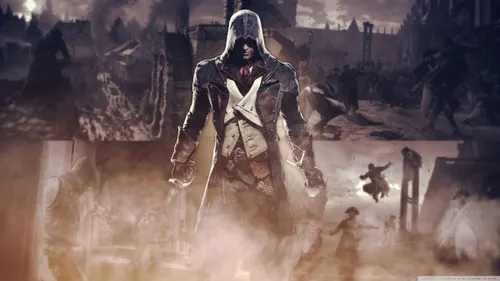
Despite being a work of fiction, Assassin’s Creed Unity accurately captures several aspects of Revolutionary France:
- The scale of Paris
- Social inequality
- Political instability
- Revolutionary violence
- Architectural details
- Public participation in politics
The atmosphere of uncertainty and transformation is particularly effective.
Players genuinely feel that they are living through a society in crisis.
What the Game Changes
Like any historical game, Unity simplifies and dramatizes events.
Several timelines are compressed, and some historical figures are portrayed differently than historians might describe them.
The Assassin-Templar conflict also introduces fictional elements that reshape certain events.
These changes serve the game’s narrative but should not be confused with historical fact.
The game is best understood as historical fiction rather than a documentary.
Why Art History Students Should Play Unity
For Art History students, Assassin’s Creed Unity offers something unique.
It allows players to experience:
- Revolutionary visual culture
- Urban design
- Monumental architecture
- Public spaces
- Political symbolism
- Historical environments
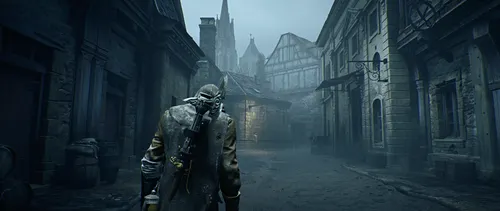
Rather than simply reading about eighteenth-century Paris, players can move through a digital reconstruction of it.
The game demonstrates how video games can function as powerful tools for engaging with history and visual culture.
Conclusion
Assassin’s Creed Unity is more than an action-adventure game. It is a remarkable attempt to recreate one of history’s most transformative periods through interactive media.
By combining historical research, architectural reconstruction, and immersive storytelling, the game offers players a window into Revolutionary France.
Although it should never replace historical scholarship, it can inspire curiosity about the people, ideas, and artistic movements that shaped the modern world.
In many ways, Unity reminds us that history is not only something we read about—it is also something we can explore.