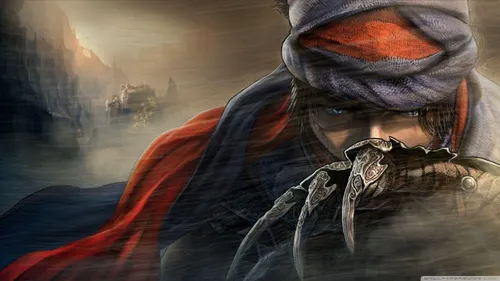
For years, the Prince of Persia franchise seemed trapped in the shadows of gaming history.
Once one of Ubisoft’s most beloved series, it gradually disappeared while Assassin’s Creed rose to dominate the company’s portfolio. Many fans wondered if the Prince would ever truly return.
Then came Prince of Persia: The Lost Crown.
Instead of attempting another large-scale open-world adventure, Ubisoft surprised everyone by creating a Metroidvania-inspired action platformer that honors the franchise’s roots while modernizing nearly every aspect of its design.
The result is not only one of the best Prince of Persia games ever made—it is one of the finest action-platformers of the decade.
A New Hero
Unlike previous entries, players do not control the Prince himself.
Instead, the protagonist is Sargon, a member of an elite group of warriors known as the Immortals.
After the Prince of Persia is kidnapped, Sargon embarks on a dangerous journey to rescue him within the mysterious Mount Qaf.
This decision initially divided fans.
However, Sargon quickly proves himself a worthy lead.
He is agile, charismatic, and perfectly suited to the game’s demanding combat and platforming systems.
Mount Qaf: A Masterpiece of Level Design
The true star of the game is Mount Qaf.
Rather than a traditional linear adventure, players explore a vast interconnected world filled with secrets, shortcuts, hidden chambers, and powerful upgrades.
The mountain constantly unfolds in unexpected ways.
New abilities allow access to previously unreachable locations, encouraging exploration and rewarding curiosity.
The level design is exceptional.
Every area feels carefully constructed.
Every shortcut feels meaningful.
Every discovery feels earned.
Movement: Platforming Perfection
Few games feel as satisfying to control as The Lost Crown.
Sargon’s movement is fast, precise, and incredibly responsive.
Players gradually unlock abilities such as:
- Air dashes
- Double jumps
- Grappling mechanics
- Teleportation powers
- Time manipulation abilities
As the adventure progresses, platforming challenges become increasingly elaborate.
Yet the controls remain so precise that failure almost always feels like the player’s mistake rather than the game’s.
The movement system represents some of Ubisoft’s finest work in years.
Combat: Fast and Rewarding
Combat is another major highlight.
The system combines:
- Light attacks
- Heavy attacks
- Parries
- Dodges
- Special abilities
- Time powers
The result feels closer to modern action games like Hollow Knight or Sekiro than traditional platformers.
Enemies are aggressive.
Bosses demand mastery.
Parrying, in particular, becomes an essential skill.
Few things are more satisfying than perfectly countering an attack and immediately turning the fight in your favor.
Time Powers Return
No Prince of Persia game would feel complete without time manipulation.
Thankfully, The Lost Crown embraces this legacy.
Sargon acquires several powers that allow him to:
- Create temporal markers
- Manipulate movement
- Alter positioning
- Solve environmental puzzles
These mechanics are woven naturally into both exploration and combat.
Rather than feeling like gimmicks, they become core components of the experience.
The game successfully modernizes one of the franchise’s defining concepts.
Boss Battles
The bosses are spectacular.
Each encounter demands different strategies and skills.
Players face:
- Mythological creatures
- Corrupted warriors
- Giant monsters
- Powerful Immortals
The battles are visually impressive and mechanically engaging.
Many require mastery of movement, timing, and pattern recognition.
Several bosses rank among the best encounters Ubisoft has designed in recent years.
Art Direction
One of the game’s greatest strengths is its visual identity.
Mount Qaf blends:
- Persian mythology
- Fantasy elements
- Ancient architecture
- Surreal landscapes
The environments constantly shift between beauty and danger.
From lush forests to forgotten temples and cosmic realms, every region possesses its own personality.
The game avoids photorealism and instead embraces a vibrant artistic style that ages beautifully.
A Celebration of Persian Mythology
Unlike many modern fantasy games, The Lost Crown draws heavily from Persian culture and mythology.
Players encounter:
- Mythological creatures
- Ancient legends
- Historical influences
- Traditional motifs
This gives the world a unique identity rarely seen in mainstream gaming.
The setting feels fresh precisely because it explores cultural inspirations often overlooked by the industry.
Accessibility and Exploration
One of the smartest additions is the Memory Shard system.
Players can take screenshots of important locations and save them directly on the map.
This seemingly simple feature solves one of the biggest frustrations often associated with Metroidvania games.
Instead of trying to remember locked doors for dozens of hours, players can create visual reminders.
It’s a brilliant quality-of-life improvement.
The Weaknesses
Despite its many strengths, the game is not flawless.
The story, while enjoyable, is less memorable than the gameplay.
Some late-game backtracking may frustrate certain players.
A few side quests feel less polished than the main adventure.
However, these issues are relatively minor compared to the overall quality of the experience.
Why The Lost Crown Works
The game’s success comes from understanding what makes great action-platformers enjoyable.
It combines:
- Tight controls
- Challenging combat
- Rewarding exploration
- Meaningful progression
- Excellent level design
Every mechanic supports another.
The result feels focused and refined.
Rather than chasing trends, the game perfects its chosen formula.
Prince of Persia Reborn
Perhaps the most impressive achievement of The Lost Crown is that it makes the franchise feel relevant again.
Instead of relying entirely on nostalgia, Ubisoft created something that can stand alongside modern classics such as:
- Hollow Knight
- Ori and the Will of the Wisps
- Metroid Dread
That is perhaps the highest compliment possible.
Verdict
Prince of Persia: The Lost Crown is one of the best surprises Ubisoft has delivered in years.
Its exceptional movement, challenging combat, outstanding level design, and clever use of time-based mechanics create an experience that feels both modern and faithful to the franchise’s legacy.
Whether you’re a longtime fan of Prince of Persia or simply love action-platformers, this is a game that deserves your attention.
It doesn’t just revive the franchise.
It gives it a bright future.
Score: 9.5/10
Pros
- Outstanding platforming
- Excellent combat system
- Brilliant level design
- Memorable boss fights
- Beautiful art direction
- Smart exploration tools
- Great use of time powers
Cons
- Story is less memorable than gameplay
- Some backtracking
- A few weak side quests
Final Verdict: A triumphant return for one of gaming’s most iconic franchises and one of the finest Metroidvania games ever made.