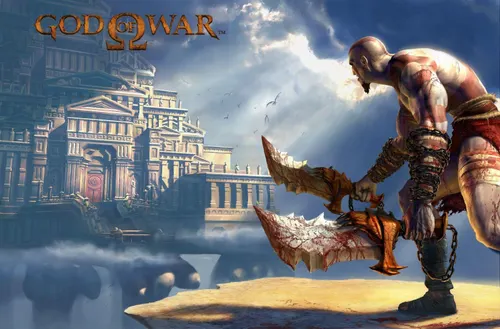
Before God of War became a cinematic epic about fatherhood and Norse mythology, it was something very different.
Released in 2005 for the PlayStation 2, the original God of War introduced players to Kratos, a Spartan warrior consumed by rage and vengeance. Combining brutal combat, Greek mythology, massive boss battles, and unprecedented spectacle, the game quickly became one of the defining titles of its generation.
Nearly two decades later, it remains one of the most important action games ever created.
The Beginning of Kratos
The story follows Kratos, a Spartan captain haunted by his past.
After years of serving Ares, the God of War, Kratos seeks revenge against the deity who manipulated him into committing an unforgivable atrocity.
To earn his freedom from endless nightmares, Kratos embarks on a quest to find Pandora’s Box and challenge Ares himself.
Unlike many heroes of Greek mythology, Kratos is not noble.
He is violent.
Obsessive.
Broken.
His journey is driven by hatred rather than heroism.
This darker approach immediately distinguished him from other protagonists of the era.
Greek Mythology Reimagined
One of the game’s greatest strengths is its interpretation of Greek mythology.
Players encounter:
- Ares
- Athena
- Zeus
- Medusa
- The Hydra
- Minotaurs
- Harpies
- Cyclopes
Rather than presenting mythology as distant legend, God of War transforms it into a living, dangerous world.
Every location feels larger than life.
Temples tower over oceans.
Ancient ruins hide deadly secrets.
Monsters emerge directly from mythological stories.
The setting remains one of the most memorable in gaming history.
Combat That Changed Action Games
The defining feature of God of War is its combat.
Kratos wields the iconic Blades of Chaos:
Two massive blades attached to chains that allow him to attack enemies from surprising distances.
Combat combines:
- Fast attacks
- Heavy attacks
- Combos
- Magic abilities
- Grabs
- Finishing moves
The system feels incredibly fluid for its time.
Players can launch enemies into the air, juggle entire groups, and unleash devastating special attacks.
Many modern action games still borrow ideas introduced here.
Brutality as Spectacle
Violence in God of War is not subtle.
The game embraces excess.
Enemies are torn apart.
Monsters are decapitated.
Bosses are defeated through spectacular finishing sequences.
The famous Quick Time Events were revolutionary at the time.
Instead of simply watching a cutscene, players actively participated in finishing moves and cinematic moments.
Although the mechanic became overused throughout the industry, God of War helped popularize it.
The Hydra Battle
The opening battle against the Hydra remains legendary.
Within minutes, players are fighting a gigantic sea monster while climbing a storm-battered ship.
The encounter perfectly demonstrates the game’s philosophy:
Everything must be bigger.
Louder.
More spectacular.
For many players, this opening instantly established God of War as something special.
Pandora’s Temple
Much of the adventure takes place inside Pandora’s Temple.
This massive structure functions as both a dungeon and a puzzle-filled labyrinth.
Players must solve:
- Environmental puzzles
- Platforming challenges
- Mechanical traps
- Logic-based obstacles
The temple feels like a mythological death trap designed specifically to test heroes.
Its scale and complexity remain impressive even today.
Boss Battles
The game excels at creating memorable encounters.
Beyond the Hydra, players face:
- Giant Minotaurs
- Mythological beasts
- Powerful warriors
- Ares himself
These battles emphasize spectacle as much as challenge.
Each encounter feels unique.
Many action games today still struggle to create boss fights as memorable as those found in God of War.
Atmosphere and Scale
One reason the game aged so well is its sense of scale.
Everything feels enormous.
Statues stretch toward the heavens.
Ancient mechanisms dwarf the player.
Titanic creatures dominate entire environments.
The PlayStation 2 hardware was pushed to its limits.
The result often felt impossible for the era.
Music and Presentation
The soundtrack deserves enormous praise.
Its orchestral and choral compositions create a sense of grandeur that perfectly matches the mythology.
Combined with strong voice acting and cinematic camera work, the presentation remains surprisingly effective decades later.
Many moments feel like interactive Greek tragedies.
The Weaknesses
Despite its legendary status, the original God of War is not flawless.
Some platforming sections can be frustrating.
Certain puzzles interrupt the pacing.
The camera occasionally creates awkward situations during combat.
A few late-game challenges remain infamous for their difficulty.
These issues are noticeable but rarely enough to diminish the overall experience.
Why God of War Was Revolutionary
At release, few games successfully combined:
- Action combat
- Puzzle solving
- Platforming
- Cinematic storytelling
- Mythological world-building
into a single package.
God of War accomplished all of this while maintaining an incredible sense of momentum.
The game constantly pushed players toward bigger challenges and greater spectacles.
That ambition helped redefine what action games could achieve.
Kratos Before Redemption
Modern audiences often associate Kratos with wisdom, restraint, and fatherhood.
The original game presents a completely different character.
This Kratos is consumed by anger.
He is tragic rather than heroic.
His flaws drive the entire story.
Understanding this version of Kratos makes his later evolution far more meaningful.
The Norse saga works because of the man introduced in 2005.
Verdict
The original God of War remains one of the greatest action games ever made.
Its brutal combat, unforgettable mythology, epic boss battles, and groundbreaking presentation created a formula that influenced an entire generation of developers.
While some mechanics show their age, the core experience remains remarkably enjoyable.
It is not merely the beginning of Kratos’s journey.
It is one of the foundations of modern action gaming.
Score: 9.5/10
Pros
- Excellent combat system
- Incredible sense of scale
- Memorable boss battles
- Fantastic use of Greek mythology
- Strong soundtrack
- Revolutionary presentation
Cons
- Occasional camera issues
- Some frustrating platforming sections
- A few overly difficult challenges
Final Verdict: A PlayStation 2 masterpiece that redefined the action genre and introduced one of gaming’s most iconic protagonists.