Why Psychological Horror Works So Well in Video Games
Horror has always been one of the most powerful genres in entertainment. But psychological horror feels different.
OPINION
Kelly Carvalho
5/11/20263 min read
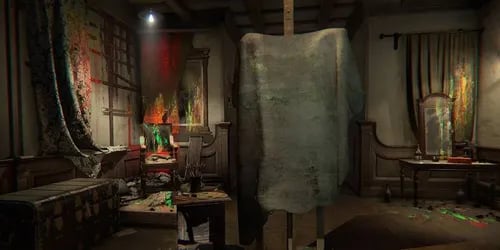
Unlike traditional horror focused on monsters, gore, or jump scares, psychological horror attacks something much deeper: the player’s mind.
And in video games, that effect becomes even more intense.
Because games are interactive, players do not simply watch fear happen — they participate in it. They walk through the darkness themselves, make decisions under stress, and experience uncertainty directly.
That’s why psychological horror works so incredibly well in gaming.
Games Create Personal Fear
Movies and books can scare audiences, but games add something unique:
Participation.
In a horror game, players are not passive observers.
They:
Open the door themselves
Walk into the hallway
Explore abandoned spaces
Choose whether to continue
This interactivity creates a personal emotional connection to fear.
The player becomes vulnerable inside the experience instead of simply watching someone else suffer.
The Fear of the Unknown Is Stronger Than Monsters
Psychological horror often avoids showing everything directly.
Instead, it relies on:
Ambiguity
Suggestion
Symbolism
Silence
Distorted reality
The human brain naturally fears uncertainty.
When players cannot fully understand what is happening, their imagination begins filling the gaps — often creating something more terrifying than anything explicitly shown.
That’s why games like:
Silent Hill 2
SOMA
Visage
feel deeply disturbing long after they end.
Atmosphere Matters More Than Jump Scares
Jump scares can create temporary shock.
Psychological horror creates sustained discomfort.
These games focus heavily on:
Oppressive environments
Sound design
Isolation
Slow pacing
Uneasy silence
The player remains tense even when nothing dangerous is happening.
This constant anxiety becomes emotionally exhausting in a way traditional horror rarely achieves.
Horror Games Use Isolation Brilliantly
One reason psychological horror succeeds in games is isolation.
Players are often:
Alone
Lost
Trapped
Confused
Uncertain about reality
Games amplify this feeling because players physically control movement through hostile spaces.
Walking through an empty corridor in a game feels different from watching one in a movie.
The player feels responsible for entering the darkness.
Psychological Horror Reflects Human Emotions
The best psychological horror games are not truly about monsters.
They are about:
Guilt
Trauma
Depression
Loneliness
Anxiety
Grief
The horror becomes emotional rather than purely physical.
In Silent Hill 2, for example, the monsters reflect the protagonist’s inner pain and psychological state.
This emotional symbolism gives psychological horror far more depth than simple survival scenarios.
Sound Design Is Extremely Powerful
Many psychological horror games rely heavily on audio.
Sometimes the scariest moments are:
Footsteps in another room
Distant breathing
Radio static
Sudden silence
Unidentifiable noises
Players become hyper-aware of sound because they expect danger constantly.
Good horror audio creates paranoia.
The player starts fearing what they cannot see.
Uncertainty Creates Constant Tension
Psychological horror games rarely explain everything clearly.
Players often question:
What is real?
What is hallucination?
Can the protagonist be trusted?
Is the danger supernatural or psychological?
That uncertainty keeps tension alive throughout the experience.
The fear becomes intellectual as well as emotional.
Horror Feels Stronger Because Failure Is Personal
In games, failure carries direct emotional impact.
When players die or lose progress, they feel responsible.
This creates:
Stress
Panic
Pressure
especially during exploration or chase sequences.
Because the player controls the experience directly, horror becomes more immersive and emotionally intense.
Indie Developers Revived Psychological Horror
Modern indie games played a huge role in the return of psychological horror.
Independent developers embraced:
Experimental storytelling
Retro visuals
Abstract symbolism
Slow atmospheric pacing
Games inspired by PS2-era horror aesthetics became extremely popular because they focused on mood rather than action.
This revival helped psychological horror become one of gaming’s strongest modern genres.
Why Psychological Horror Stays With Players
Most action games are forgotten after a few weeks.
Psychological horror lingers.
Players continue thinking about:
Symbolism
Hidden meanings
Emotional themes
Unanswered questions
Long after finishing the game.
The experience becomes mentally invasive in a way few genres achieve.
That emotional residue is part of what makes psychological horror so powerful.
The Future of Horror Gaming
As graphics, sound technology, and AI continue improving, psychological horror may become even more immersive.
But technology alone is not what makes these games terrifying.
What truly matters is atmosphere, uncertainty, and emotional vulnerability.
The scariest horror games are not the loudest or most violent.
They are the ones that quietly enter the player’s mind — and stay there.
Final Thoughts
Psychological horror works so well in games because interactivity transforms fear into something personal.
Players do not simply witness terror.
They participate in it.
By combining atmosphere, uncertainty, emotional symbolism, and direct player involvement, psychological horror games create experiences that feel uniquely intimate and deeply disturbing.
And sometimes, the most terrifying thing in a horror game is not the monster hiding in the dark.
It is the feeling that the darkness understands you.
GameGridScore
Play More. Discover More. Score Better.
Brand
Explore our sleek website template for seamless navigation.
Contact
Newsletter
info@gamegridscore.com
(21) 9 8891-6438
© 2024. All rights reserved.