
Have Modern Games Lost Their Creativity?
Every few years, the gaming community asks the same question:
OPINION
Kelly Carvalho
5/11/20263 min read
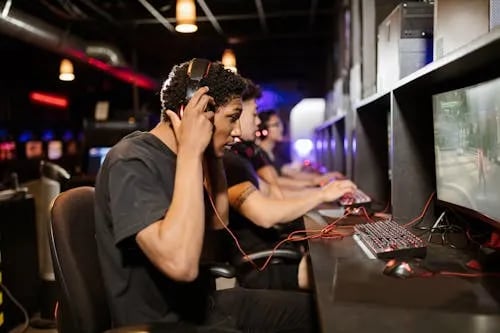
“Have modern games become less creative?”
It’s a debate that appears constantly online, especially among older players who miss the feeling of discovering something truly new during the PlayStation 2, Xbox 360, and early PC gaming eras.
Today’s industry is bigger than ever. Games have larger budgets, more realistic graphics, and massive open worlds. Yet many players feel something important has changed.
Not necessarily quality.
But creativity.
So… have modern games really lost their imagination?
The answer is more complicated than it seems.
Why Many Players Feel Modern Games Are Repetitive
One of the biggest criticisms of modern AAA gaming is formula repetition.
Many blockbuster games now share the same systems:
Huge open worlds
Skill trees
Crafting mechanics
Battle passes
Live-service elements
Endless side activities
Even when the settings change, the structure often feels familiar.
Players sometimes describe modern gaming as “safe.”
Large publishers spend hundreds of millions of dollars developing games, which makes experimentation financially risky. As a result, companies often rely on formulas that already proved successful.
This creates games that feel polished — but sometimes emotionally predictable.
The Industry Became Extremely Expensive
Creativity is often limited by cost.
During the PS2 era, developers could take strange risks because game budgets were smaller. Studios experimented constantly with:
Weird mechanics
Unusual stories
Abstract art styles
Experimental gameplay systems
If a game failed, the financial damage was manageable.
Modern AAA development is different.
Some games now cost hundreds of millions of dollars to produce and market. Because of that, publishers prioritize:
Safe franchises
Proven formulas
Massive mainstream appeal
Risk became dangerous.
Nostalgia Also Changes Perspective
At the same time, nostalgia affects how players remember older games.
When we were younger:
Games felt more magical
Mechanics felt new
Online culture was smaller
The industry felt less corporate
Part of the “lost creativity” argument comes from the emotional experience of discovering games for the first time.
Modern players are also more experienced now, which naturally makes innovation harder to notice.
Indie Games Became the New Creative Space
Ironically, creativity in gaming did not disappear.
It moved.
Independent developers now produce many of the industry’s most original experiences.
Games like:
Undertale
Disco Elysium
Outer Wilds
Return of the Obra Dinn
proved that innovative design still exists.
In many ways, indie games now occupy the creative role that mid-budget studios once held during earlier generations.
Graphics Became More Important Than Ideas
Modern gaming often emphasizes:
Realism
Technical fidelity
Massive scale
Cinematic presentation
Sometimes this comes at the expense of experimentation.
Older games were limited technically, which forced developers to rely more heavily on:
Art direction
Gameplay innovation
Atmosphere
Creative mechanics
Because of this, many classic games feel more artistically distinct despite their simpler technology.
Live-Service Design Changed Game Development
One major shift in modern gaming is the rise of live-service models.
Many publishers now design games around:
Retention
Monetization
Seasonal updates
Engagement metrics
Instead of creating self-contained experiences, some studios prioritize systems that keep players online for years.
Critics argue this can reduce artistic focus because games become products designed for long-term monetization rather than complete creative works.
But Modern Games Also Achieved Incredible Things
Despite criticism, modern gaming still produces extraordinary experiences.
Games like:
Elden Ring
Red Dead Redemption 2
Death Stranding
Alan Wake 2
show that ambitious creativity still exists even within AAA development.
Some modern games are artistically and technically astonishing.
The difference is that these projects feel rarer.
Social Media Changed How Games Are Made
Modern internet culture also affects creativity.
Studios now develop games under constant pressure from:
Online reactions
Algorithms
Influencer culture
Immediate criticism
Viral trends
This environment sometimes encourages safer design choices.
A controversial experiment can quickly become a social media disaster.
Players Want Familiarity Too
An important truth is that players themselves often reward familiarity.
Many of the best-selling games each year are:
Sequels
Remakes
Established franchises
Players frequently ask for innovation while simultaneously purchasing familiar experiences.
The industry responds to consumer behavior.
The Real Difference: The Middle Industry Disappeared
Many critics believe the biggest problem is not that creativity vanished — it’s that the “middle-tier” gaming space collapsed.
During the PS2 and Xbox 360 eras, studios regularly created:
AA games
Experimental projects
Mid-budget risks
Today the industry feels divided between:
Massive AAA blockbusters
Small indie games
That missing middle space once allowed creativity to flourish more naturally.
Final Thoughts
Modern games did not lose creativity completely.
But the structure of the industry changed dramatically.
AAA gaming became:
More expensive
More corporate
More risk-averse
while indie developers inherited much of the experimentation that once existed across the entire industry.
At the same time, nostalgia makes older generations of games feel more emotionally powerful in memory.
The truth is that creativity still exists in gaming.
You just have to look for it more carefully now.
And when a truly original game finally appears, players remember exactly why they fell in love with games in the first place.
GameGridScore
Play More. Discover More. Score Better.
Brand
Explore our sleek website template for seamless navigation.
Contact
Newsletter
info@gamegridscore.com
(21) 9 8891-6438
© 2024. All rights reserved.