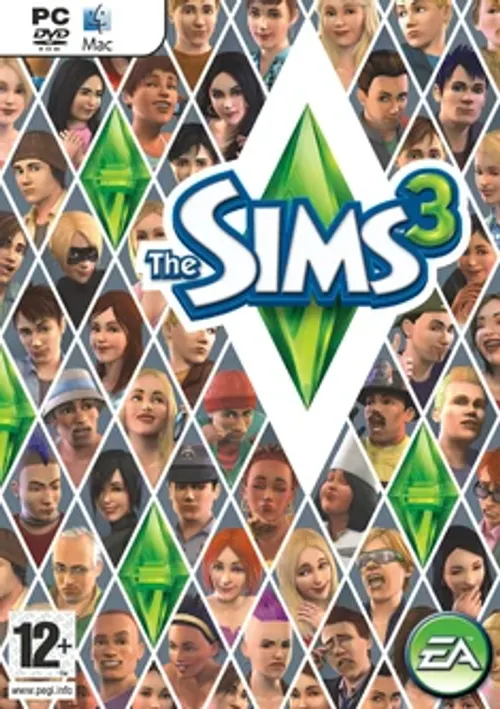
Released in 2009 by Electronic Arts and developed by Maxis, The Sims 3 expanded the life simulation formula into something far more open, dynamic, and unpredictable than previous entries.
Instead of feeling like isolated houses connected by loading screens, the world suddenly became alive.
Players could:
-
explore entire neighborhoods
-
build careers
-
create families
-
travel
-
start businesses
-
follow generations across decades
The result was one of the most immersive sandbox life simulators ever made.
And even today, many fans still believe no other Sims game fully surpassed it.
The Open World Changed Everything
The biggest revolution in The Sims 3 was the open world.
For the first time, Sims could:
-
leave home freely
-
visit neighbors
-
explore parks
-
drive around town
-
go to work seamlessly
without constant loading screens between locations.
This made the world feel connected and alive.
Watching Sims move naturally throughout the town created immersion that earlier Sims games never fully achieved.
Even today, the open-world system remains one of the franchise’s most beloved features.
The Freedom Feels Endless
The Sims 3 gives players extraordinary freedom.
You can:
-
create dream houses
-
build chaotic families
-
become rich
-
live in poverty
-
become a celebrity
-
run farms
-
explore supernatural life
-
raise generations
The game supports both realistic storytelling and complete absurdity.
Some players create peaceful suburban families.
Others trap Sims in swimming pools without ladders.
Both are valid Sims experiences.
Personality Traits Made Sims Feel More Human
One of the game’s smartest additions was the trait system.
Instead of simple personality sliders, Sims receive unique traits like:
-
ambitious
-
insane
-
kleptomaniac
-
genius
-
cowardly
-
hopeless romantic
These traits dramatically affect behavior and interactions.
As a result, Sims feel far more distinct and unpredictable compared to earlier entries.
The system creates emergent storytelling naturally.
The Customization Was Incredible
The Create-a-Style system became legendary.
Players could customize:
-
furniture
-
clothing
-
walls
-
patterns
-
colors
-
textures
almost endlessly.
This level of personalization allowed players to create highly unique homes and characters.
Many fans still miss this feature because later Sims games simplified customization significantly.
Expansion Packs Turned the Game Into a Giant Sandbox
The Sims 3 expansions massively expanded gameplay possibilities.
Players could experience:
-
university life
-
world adventures
-
supernatural creatures
-
pets
-
seasons
-
island living
-
future technology
Each expansion added meaningful systems instead of feeling like minor cosmetic updates.
Combined together, The Sims 3 became enormous.
The Storytelling Potential Is Amazing
One reason players love The Sims 3 is emergent storytelling.
Unexpected situations constantly happen:
-
relationships fail
-
disasters occur
-
Sims behave strangely
-
family drama appears naturally
The game often feels less like a simulator and more like a personal television series players direct themselves.
Every save file creates unique memories.
The Soundtrack Is Pure Nostalgia
The music in The Sims 3 perfectly captures the cozy suburban atmosphere.
The soundtrack feels:
-
relaxing
-
cheerful
-
emotional
-
nostalgic
Even simple menu music triggers strong memories for longtime fans.
The Sims franchise always excelled at creating comforting audio design, and The Sims 3 may be its best example.
The Game Is Surprisingly Funny
The Sims 3 contains constant absurd humor.
From:
-
bizarre NPC behavior
-
ridiculous accidents
-
exaggerated animations
-
chaotic social interactions
the game constantly creates comedic moments.
The famous Simlish language also remains one of gaming’s most iconic fictional languages.
Performance Problems Hurt the Experience
Despite its brilliance, The Sims 3 has serious technical issues.
The game is infamous for:
-
long loading times
-
memory problems
-
lag
-
crashes
-
poor optimization
Especially with multiple expansions installed.
Even powerful PCs sometimes struggle with heavily populated save files.
For many players, performance became the game’s biggest weakness.
The Graphics Aged Unevenly
The visual style remains charming overall, but some character models aged awkwardly.
Certain Sims can appear:
-
overly shiny
-
stiff
-
uncanny
Still, the artistic freedom and world detail help compensate for the aging graphics.
Why Fans Still Prefer The Sims 3
Many players believe The Sims 3 captured the perfect balance between:
-
freedom
-
complexity
-
creativity
-
simulation depth
Later entries improved visuals and performance in some ways, but many fans feel they lost some of the open-ended ambition that made The Sims 3 special.
The game feels messy sometimes.
But it also feels alive.
The Community Kept the Game Alive
Mods and custom content helped The Sims 3 survive for years.
Players created:
-
gameplay overhauls
-
realism systems
-
furniture packs
-
hairstyles
-
bug fixes
-
new careers
The modding community dramatically extended the game’s lifespan and depth.
Final Verdict
The Sims 3 remains one of the most ambitious life simulators ever created.
Its combination of:
-
open-world freedom
-
deep customization
-
emergent storytelling
-
personality systems
-
sandbox creativity
allowed it to become a beloved classic.
The technical problems are real.
But so is the magic.
Very few games make players feel this connected to the worlds and stories they create themselves.
And that’s why so many fans still return to Sunset Valley after all these years.
GameGridScore Rating: 9.4/10
Pros
-
Incredible open-world design
-
Endless customization
-
Strong personality systems
-
Amazing expansion packs
-
Excellent emergent storytelling
Cons
-
Poor optimization
-
Long loading times
-
Aging character models
GameGridScorePlay More. Discover More. Score Better.