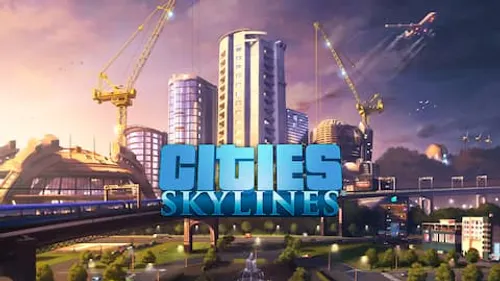
Few games capture the fantasy of building an entire city as effectively as Cities: Skylines. Developed by Colossal Order and released in 2015, the game arrived at a time when many city-building fans were disappointed by the limitations of modern alternatives.
What followed was one of the greatest success stories in the simulation genre.
Cities: Skylines didn’t simply revive city builders—it became the new standard.
Combining deep management systems, creative freedom, and an active modding community, the game offers one of the most satisfying sandbox experiences ever created.
Build Anything
At its core, Cities: Skylines gives players a simple goal:
Build a city.
The beauty lies in how much freedom exists within that objective.
Players control:
- Road networks
- Zoning
- Public transport
- Utilities
- Education
- Healthcare
- Taxes
- District policies
The game constantly presents challenges while allowing players to solve them in their own way.
There is rarely a single correct answer.
Every city becomes unique.
The Joy of Urban Planning
Unlike many management games that focus purely on numbers, Cities: Skylines makes city planning genuinely enjoyable.
Road placement alone becomes an art form.
Players quickly learn that a poorly designed intersection can create traffic problems affecting an entire district.
Over time, simple neighborhoods evolve into sprawling metropolitan regions connected by highways, rail systems, airports, and harbors.
Watching a city grow from a small settlement into a bustling urban center is immensely rewarding.
Traffic: The True Final Boss
Every Cities: Skylines player eventually learns a painful lesson:
Traffic is everything.
A city can have:
- Plenty of money
- Happy citizens
- Strong services
Yet a single traffic disaster can cripple the entire economy.
Garbage trucks stop moving.
Emergency services arrive late.
Businesses lose supplies.
Citizens abandon neighborhoods.
The traffic simulation is one of the game’s greatest strengths because it creates realistic challenges that require thoughtful solutions.
Many players spend hundreds of hours perfecting road systems alone.
Creativity Without Limits
One reason for the game’s enduring popularity is its flexibility.
Some players focus on efficiency.
Others focus on realism.
Many treat the game as a digital architecture tool.
The game supports:
- Realistic cities
- Futuristic megacities
- European towns
- American suburbs
- Coastal resorts
- Industrial regions
The possibilities feel almost endless.
The game can be played as a management simulator, a creative sandbox, or something in between.
Visual Design
Although released in 2015, Cities: Skylines still possesses a charming visual style.
Buildings develop over time.
Districts acquire unique identities.
Public transportation systems become living networks connecting thousands of simulated citizens.
The game may not feature cutting-edge graphics, but its visual clarity is excellent.
Players can immediately understand how their city functions simply by observing it.
Public Transportation Done Right
One of the most satisfying aspects of the game is designing transportation networks.
Players can construct:
- Bus routes
- Metro systems
- Trains
- Ferries
- Airports
- Tram lines
Building an efficient transportation system often feels as rewarding as constructing the city itself.
Watching thousands of citizens successfully navigate a carefully planned network creates a unique sense of accomplishment.
A Living Simulation
What separates Cities: Skylines from many competitors is its simulation depth.
Citizens have:
- Homes
- Jobs
- Daily routines
- Transportation needs
Goods move through supply chains.
Businesses depend on logistics.
Services respond to emergencies.
The city feels alive because its systems are interconnected.
Every decision has consequences.
The Modding Community
The game’s greatest long-term strength may be its community.
The modding scene is extraordinary.
Players have created:
- New buildings
- Real-world landmarks
- Traffic systems
- Visual improvements
- Gameplay expansions
- Entire maps
For many fans, mods transform an already excellent game into an almost limitless city-building platform.
Few games benefit as much from community support.
Relaxing Yet Challenging
One of the reasons Cities: Skylines appeals to such a wide audience is its balance between relaxation and complexity.
The game rarely pressures players.
There are no enemies.
No wars.
No deadlines.
Yet meaningful challenges constantly emerge through the city’s own growth.
The result is a uniquely satisfying gameplay loop.
It is possible to spend hours improving a single neighborhood without realizing how much time has passed.
The Weaknesses
Despite its many strengths, Cities: Skylines is not flawless.
As cities become larger, performance can suffer significantly.
The base game also feels somewhat incomplete without expansions.
Many of the most interesting systems were introduced through DLC.
New players may also find the learning curve intimidating, particularly when dealing with advanced traffic management.
Why Cities: Skylines Became a Classic
The game succeeded because it understood what city-building fans wanted.
Players wanted:
- Freedom
- Complexity
- Creativity
- Realistic simulation
- Long-term progression
Cities: Skylines delivered all of these elements while avoiding unnecessary restrictions.
It respects player imagination.
That freedom remains one of its greatest strengths.
Cities as Works of Art
From an artistic perspective, Cities: Skylines is fascinating because it allows players to become urban designers.
Every road, district, and skyline becomes a form of creative expression.
Some cities prioritize efficiency.
Others prioritize beauty.
Many attempt to balance both.
The game transforms urban planning into an artistic medium.
In this sense, every city tells a story about its creator.
Verdict
Cities: Skylines is one of the finest simulation games ever made.
Its combination of deep management systems, creative freedom, realistic city planning, and nearly endless replayability makes it a landmark title in the city-building genre.
Whether you want to optimize transportation networks, recreate real-world cities, or simply watch a thriving metropolis grow from nothing, the game provides an incredibly rewarding experience.
Nearly a decade after its release, it remains the king of city-building games.
Score: 9.5/10
Pros
- Deep city simulation
- Outstanding creative freedom
- Excellent traffic systems
- Huge replay value
- Fantastic modding community
- Rewarding progression
Cons
- Performance issues in large cities
- DLC can become expensive
- Steep learning curve for beginners
Final Verdict: The definitive city-building simulator and one of the greatest management games ever created.