Following the success of Dying Light, expectations for Dying Light 2 Stay Human were enormous. Techland promised a larger world, meaningful choices, improved parkour, deeper RPG systems, and a story shaped by player decisions. On paper, it sounded like the ultimate evolution of the franchise.
The result is a game that succeeds in many areas while struggling to capture some of the magic that made the original so beloved. Dying Light 2 is bigger, more ambitious, and mechanically richer—but it is not always better.
Despite its flaws, it remains one of the most entertaining open-world zombie games available today.
Story: A More Personal Journey
Players control Aiden Caldwell, a Pilgrim wandering through the remains of civilization in search of his missing sister.
The adventure takes place in Villedor, one of the last major human settlements after the collapse of modern society.
Unlike the first game’s relatively simple narrative, Dying Light 2 places greater emphasis on politics, faction conflicts, and moral choices.
Throughout the story, players must decide who controls parts of the city and determine the fate of numerous characters.
While the narrative is more ambitious than its predecessor, the execution is inconsistent.
Some choices feel meaningful.
Others create the illusion of impact without significantly changing the overall story.
Villedor: A Vertical Playground
If there is one area where Dying Light 2 unquestionably improves upon the original, it is movement.
Villedor is designed vertically.
The city is filled with:
- Rooftops
- Skyscrapers
- Windmills
- Towers
- Bridges
- Suspended pathways
The environment constantly encourages players to move above street level.
This design philosophy transforms exploration into one of the game’s greatest strengths.
Simply traversing the city can be more enjoyable than completing missions.
Parkour: Among the Best in Gaming
Techland refined the movement system considerably.
Aiden can:
- Wall run
- Vault obstacles
- Swing from bars
- Glide through the air
- Climb towering structures
As new abilities unlock, movement becomes increasingly fluid and expressive.
The addition of the paraglider is particularly important.
What initially feels like a simple traversal tool gradually becomes one of the most satisfying mechanics in the game.
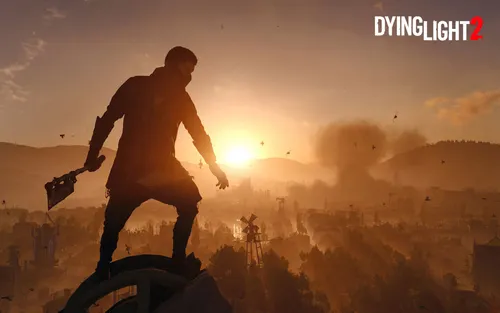
Flying between skyscrapers at sunset captures a sense of freedom rarely achieved in open-world games.
Combat: More Dynamic but Less Brutal
Combat has undergone significant changes.
The system is faster and more acrobatic than before.
Players can:
- Kick enemies from rooftops
- Perform aerial attacks
- Use environmental hazards
- Chain parkour moves into combat
These additions create exciting encounters.
However, some longtime fans argue that the combat lacks the raw physical impact of the original Dying Light.
Weapons feel lighter, and enemy reactions can seem less convincing.
The combat remains enjoyable, but it sacrifices some of the gritty realism that made the first game’s melee system so memorable.
The Day-Night System Returns
The day-night cycle remains a central feature.
Yet its role has changed.
In the original game, nighttime was terrifying.
Players often avoided leaving safe zones after dark.
In Dying Light 2, nights are less oppressive.
Instead of serving primarily as horror segments, they function as opportunities.
Many buildings become accessible only after sunset, encouraging players to venture into dangerous areas for valuable rewards.
This creates an interesting risk-reward system but reduces some of the fear that defined the original experience.
The Missing Horror
One of the most common criticisms of Dying Light 2 concerns its atmosphere.
The first game frequently felt like survival horror.
The sequel often feels closer to an action RPG.
While infected remain dangerous, players quickly gain access to powerful abilities that diminish the sense of vulnerability.
The game is rarely frightening.
For some players, this shift is welcome.
For others, it represents a loss of identity.
Choices and Factions
A major selling point before release was the promise of meaningful player choices.
Players encounter several factions, including:
- Peacekeepers
- Survivors
- Renegades
Control of districts can be assigned to different groups, unlocking unique rewards and infrastructure.
This system works well mechanically.
However, the narrative consequences often feel smaller than expected.
The game presents choice as a defining feature, but many decisions ultimately lead to similar outcomes.
Visual Design
Villedor is visually impressive.
Unlike the dusty realism of Harran, the city is characterized by overgrown rooftops, vegetation-covered buildings, and colorful urban landscapes.
Nature has begun reclaiming civilization.
The result is one of the most distinctive post-apocalyptic settings in modern gaming.
The contrast between decay and beauty gives the city a unique identity.
RPG Systems
Dying Light 2 leans heavily into RPG mechanics.
Players gain:
- Experience points
- Skill trees
- Loot rarity systems
- Crafting upgrades
- Character progression
While these systems provide long-term goals, they occasionally make the game feel overly dependent on numbers and gear scores.
Some fans preferred the simpler progression of the original.
Others appreciate the added customization.
Technical Improvements
At launch, Dying Light 2 suffered from numerous bugs and technical issues.
Over time, Techland released extensive updates that significantly improved the experience.
Today, the game is far more polished than it was at release.
The developer’s commitment to long-term support remains one of the franchise’s strengths.
Why Dying Light 2 Divides Fans
The reason Dying Light 2 remains controversial is simple.
It is not trying to be Dying Light 1.
The sequel prioritizes:
- Freedom
- Mobility
- RPG progression
- Player choice
The original prioritized:
- Survival
- Horror
- Atmosphere
- Vulnerability
Neither approach is inherently superior.
They simply appeal to different audiences.
Verdict
Dying Light 2 Stay Human is an ambitious sequel that expands nearly every aspect of the original game.
Its parkour system is phenomenal.
Its world is beautiful.
Its exploration is consistently rewarding.
However, in becoming larger and more RPG-focused, it loses some of the tension and horror that made the first game special.
It may not surpass its predecessor, but it remains one of the strongest open-world zombie experiences available.
Score: 8/10
Pros
- Exceptional parkour system
- Gorgeous open world
- Excellent vertical level design
- Fun exploration
- Strong post-launch support
- Satisfying progression
Cons
- Less horror than the original
- Choices often lack major consequences
- Combat feels less impactful
- Story can be inconsistent
Final Verdict: A highly enjoyable open-world adventure that improves movement and exploration but sacrifices some of the fear and atmosphere that made the original Dying Light unforgettable.