Zombie games are everywhere. Over the years, players have fought the undead in shopping malls, post-apocalyptic wastelands, small towns, and entire cities. Yet despite the crowded genre, Dying Light managed to stand out by combining first-person parkour, brutal melee combat, and one of the most intense day-night cycles ever created.
Released by Techland in 2015, Dying Light took familiar zombie concepts and transformed them into something uniquely thrilling. Nearly a decade later, it remains one of the finest open-world zombie games ever made.
Story: A Familiar Premise with Strong Execution
Players assume the role of Kyle Crane, an undercover operative sent into the quarantined city of Harran to retrieve sensitive information.
What begins as a straightforward mission quickly becomes far more complicated as Crane forms relationships with the city’s survivors and becomes caught between competing factions.
The narrative is not revolutionary.
Many of its themes—survival, sacrifice, corruption, and hope—are familiar to zombie fiction.
However, strong voice acting, memorable characters, and excellent world-building help elevate the story beyond genre clichés.
The true star of the game is not its plot.
It’s the city itself.
Harran: A City Designed for Movement
Most open-world games encourage exploration.
Dying Light encourages movement.
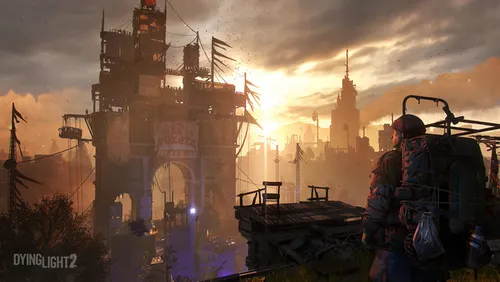
Harran is one of the most intelligently designed urban environments in gaming.
Its rooftops, balconies, construction sites, and narrow alleyways create a giant playground built around mobility.
Every building becomes an opportunity.
Every rooftop becomes a pathway.
The city feels less like a map and more like a giant obstacle course.
Parkour: The Heart of the Experience
The defining feature of Dying Light is its parkour system.
Inspired by games such as Mirror’s Edge, players can:
- Climb buildings
- Leap between rooftops
- Slide under obstacles
- Vault over enemies
- Scale walls
The movement initially feels challenging.
But as Crane develops new abilities, traversing the city becomes incredibly satisfying.
Few games capture the sensation of momentum as effectively.
Running across rooftops while a horde of infected chases behind you never stops being exhilarating.
Combat: Brutal and Satisfying
Unlike many zombie games that focus heavily on firearms, Dying Light emphasizes melee combat.
Players use:
- Pipes
- Axes
- Machetes
- Hammers
- Swords
- Improvised weapons
Every hit feels impactful.
Enemies stumble, lose limbs, and react dynamically to attacks.
Weapon durability forces players to constantly adapt, encouraging experimentation rather than reliance on a single favorite weapon.
The combat is messy, violent, and deeply satisfying.
Exactly as zombie survival should be.
The Day-Night Cycle
If parkour is the game’s defining mechanic, the day-night cycle is its greatest innovation.
During daylight hours, zombies are relatively slow and manageable.
The city feels dangerous but survivable.
At night, everything changes.
A new class of infected known as Volatiles emerges.
These creatures are:
- Faster
- Stronger
- More aggressive
- Far more intelligent
Suddenly, the hunter becomes the hunted.
Nighttime transforms the game from an action-adventure experience into genuine survival horror.
The tension is extraordinary.
Volatiles: Gaming’s Most Terrifying Zombies
Many zombie games struggle to make their enemies frightening after a few hours.
Dying Light solves this problem through the Volatiles.
Even experienced players often avoid direct confrontation with them.
Their speed and unpredictability force players to rely on stealth, parkour, and quick decision-making.
The first time a Volatile spots you and begins a rooftop pursuit remains one of the most memorable moments in modern horror gaming.
Visual Design and Atmosphere
Although released in 2015, Dying Light still possesses impressive visual design.
Harran feels alive despite its collapse.
Players encounter:
- Abandoned apartments
- Quarantine zones
- Rooftop gardens
- Military checkpoints
- Slums
- Wealthy districts
The contrast between human life and societal destruction creates a believable post-apocalyptic setting.
The city tells its own story through environmental details.
The Following Expansion
Many expansions feel optional.
The Following does not.
Widely considered one of the greatest DLC expansions ever released, it introduces:
- A massive new region
- Vehicles
- Additional story content
- New enemy types
The buggy alone dramatically changes gameplay, creating a fresh experience without abandoning the core mechanics that made the original game successful.
For many fans, The Following completes the Dying Light experience.
The Weaknesses
Despite its strengths, Dying Light is not flawless.
The main story occasionally relies on familiar zombie genre tropes.
Some side missions feel repetitive.
The progression system can become grindy in later stages.
Additionally, firearm combat lacks the impact and depth of the melee system.
Fortunately, these issues rarely overshadow the game’s strengths.
Why Dying Light Still Holds Up
Many open-world games age poorly.
Dying Light has endured because its core gameplay remains exceptional.
The combination of:
- Parkour
- Survival horror
- Open-world exploration
- Dynamic day-night mechanics
creates an experience few games have successfully replicated.
Even years after release, the game feels fresh.
Its movement system alone remains among the best in the industry.
Verdict
Dying Light takes familiar zombie concepts and elevates them through innovative design.
The parkour system transforms traversal into a joy.
The combat is brutal and satisfying.
The day-night cycle creates genuine tension.
And Harran remains one of gaming’s most memorable settings.
While the story may not reinvent the genre, the gameplay certainly does.
For fans of open-world adventures, survival horror, or zombie games in general, Dying Light remains essential.
Score: 9/10
Pros
- Outstanding parkour mechanics
- Excellent day-night cycle
- Satisfying melee combat
- Memorable open world
- Terrifying Volatiles
- Fantastic DLC expansion
Cons
- Predictable main story
- Some repetitive side missions
- Weak firearm combat
Final Verdict: A thrilling blend of parkour and survival horror that remains one of the best zombie games ever made.