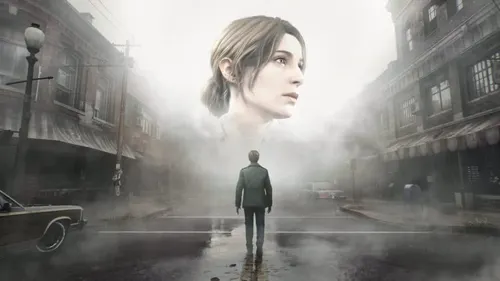
Few horror franchises understand fear as deeply as Silent Hill 2 and the broader Silent Hill series.
Most horror games try to scare players with:
- monsters,
- jump scares,
- violence,
- or constant danger.
Silent Hill does something far more disturbing.
It attacks the mind.
That is why the franchise remains psychologically powerful decades later.
While many horror games become less frightening over time, Silent Hill continues to feel deeply uncomfortable because its horror is built around:
- guilt,
- trauma,
- grief,
- repression,
- loneliness,
- and the fear of confronting oneself.
The monsters are terrifying.
But the real horror is always human.
Silent Hill Understands Emotional Fear
Most horror games ask:
“Can you survive the monster?”
Silent Hill asks:
“Can you survive yourself?”
That difference changes everything.
The series rarely focuses on simple physical danger alone.
Instead, it creates emotional horror by forcing characters to confront:
- personal guilt,
- buried memories,
- emotional trauma,
- psychological collapse.
The town itself behaves almost like a living subconscious.
Silent Hill does not simply contain monsters.
It creates them.
The Town Reflects the Human Mind
One of Silent Hill’s greatest ideas is that the town changes based on the psychology of the person trapped inside it.
This transforms the environment into emotional symbolism.
Fog-covered streets, rusted hallways, endless darkness, and decaying rooms are not just aesthetic choices.
They represent:
- mental decay,
- repression,
- isolation,
- emotional suffering.
The world feels dreamlike because dreams themselves often distort reality emotionally rather than logically.
Silent Hill understands nightmare logic perfectly.
Monsters Are Psychological Symbols
Unlike generic horror creatures, Silent Hill’s monsters usually symbolize something deeply personal.
This is especially true in Silent Hill 2.
Creatures are designed around:
- guilt,
- sexual repression,
- punishment,
- shame,
- trauma,
- self-hatred.
The famous Pyramid Head is terrifying not simply because of his appearance, but because he represents psychological punishment and internal suffering.
The monsters feel disturbing because they appear emotionally wrong, not just visually scary.
That distinction is incredibly important.
Psychological Horror Lasts Longer Than Jump Scares
Jump scares create temporary fear.
Psychological horror creates lingering discomfort.
Silent Hill often avoids loud, aggressive horror tactics and instead focuses on:
- oppressive atmosphere,
- ambiguity,
- silence,
- uncertainty,
- emotional dread.
Players are constantly unsettled because the game refuses to fully explain itself.
The unknown becomes terrifying.
Even empty hallways feel threatening because the atmosphere creates anticipation and anxiety.
Sound Design Is a Major Reason the Games Feel Disturbing
The audio design by Akira Yamaoka is one of the biggest reasons Silent Hill feels psychologically oppressive.
The soundtrack mixes:
- industrial noise,
- ambient distortion,
- emotional piano melodies,
- mechanical sounds,
- static interference.
The result feels deeply unnatural.
Sometimes the music is not traditionally scary at all.
Instead, it feels melancholic, lonely, and emotionally damaged.
That emotional sadness becomes part of the horror itself.
Silent Hill Understands Loneliness
Many horror games overwhelm players with constant enemies.
Silent Hill often does the opposite.
Large portions of the games feel empty and isolated.
Players wander through:
- abandoned streets,
- silent buildings,
- fog-covered spaces,
- dead environments.
That loneliness creates vulnerability.
The silence becomes psychologically exhausting because the player’s imagination begins filling the emptiness with fear.
Ambiguity Makes the Horror Stronger
Silent Hill rarely explains everything clearly.
The games leave many questions unanswered:
- Is the town supernatural?
- Are events symbolic?
- Are the monsters real?
- Is everything psychological?
- What is truly happening?
This ambiguity forces players to interpret meaning themselves.
And the human brain naturally fears uncertainty more than clear answers.
The mystery becomes part of the horror.
Trauma Is Central to the Series
At its core, Silent Hill is often about emotional suffering rather than survival.
Characters are usually broken people dealing with:
- grief,
- abuse,
- guilt,
- depression,
- denial.
The horror emerges from internal pain becoming external reality.
That psychological foundation makes the games emotionally heavier than traditional horror titles.
Players are not simply escaping monsters.
They are witnessing human collapse.
The “Otherworld” Feels Like Mental Breakdown
The transition into Silent Hill’s rusted “Otherworld” remains one of gaming’s most iconic horror concepts.
Walls decay.
Metal appears everywhere.
Reality becomes hostile.
This transformation feels terrifying because it resembles psychological disintegration.
The environment itself appears unstable and diseased.
Players feel trapped inside a nightmare shaped by emotional trauma.
The Games Respect the Player’s Intelligence
Silent Hill does not constantly explain its symbolism.
It trusts players to:
- interpret themes,
- analyze imagery,
- connect emotional clues.
That subtle storytelling makes the experience feel mature and intellectually engaging.
The horror feels more personal because players actively participate in understanding it.
Why Silent Hill Still Feels Unique
Modern horror games often focus on:
- fast pacing,
- loud scares,
- cinematic action,
- constant danger.
Silent Hill focuses on:
- atmosphere,
- symbolism,
- psychological discomfort,
- emotional vulnerability.
That slower, more introspective horror style remains incredibly rare.
Even decades later, few games replicate its emotional intensity successfully.
Silent Hill Feels Like a Nightmare Instead of a Movie
Many horror games feel cinematic.
Silent Hill feels subconscious.
Events often resemble dreams:
- fragmented logic,
- symbolic imagery,
- distorted spaces,
- emotional realism instead of physical realism.
That dreamlike structure creates a type of horror that feels deeply personal and difficult to fully explain.
Which is exactly why it stays in people’s minds for so long.
Final Thoughts
Silent Hill works psychologically because it understands that the deepest fears are rarely external.
The series recognizes that:
- guilt can destroy people,
- trauma reshapes perception,
- loneliness creates paranoia,
- and the human mind can become its own prison.
The monsters matter.
But the emotional pain behind them matters more.
That is why Silent Hill continues to disturb players long after the screen turns off.
Not because it scares the eyes.
Because it unsettles the mind.